Tuesday, October 19, 2010

PLUS Expressways Bhd


Kerajaan BN mungkin akan terpaksa membelanjakan RM64 bilion sebagai bayaran pampasan kepada Plus Highway Berhad, jika kerajaan bercadang membekukan kenaikkan kadar tol sehingga konsesi syarikat itu berakhir pada tahun 2038. Itu adalah kesan jangka panjang daripada apa yang diumumkan pada pembentangan Bajet 2011 oleh Najib. Datuk Izzaddin Idris selaku MD UEM Group berkata PLUS Expressways Bhd harus dibayar RM5 bilion wang pampasan. Bayaran tersebut adalah bagi membolehkan kadar tol di empat lebuh raya milik Plus tidak dinaikkan. Tindakan membekukan tol ini tidak masuk akal apabila kerajaan terpaksa memberi pampasan sebanyak RM5 bilion kepada pemilik konsesi dan berkemungkinan besar sehingga RM64 bilion dalam tempoh keseluruhan konsesi itu. Tapi dalam masa yang sama pembelian langsung PLUS oleh kerajaan hanya akan menelan belanja sebanyak RM23 bilion sebagaimana yang ditawarkan UEM/KWSP. Najib cuba bertindak popular dan kerajaan hanya bertindak sedemikian semata-mata untuk mengembirakan pengundi dengan merahsiakan kesan sebenar. Adalah lebih murah bagi kerajaan membeli terus syarikat lebuh raya itu pada harga RM4.60 sesaham seperti yang ditawarkan oleh firma usahasama UEM dan Kumpulan Wang Simpanan Pekerja (KWSP). Jikalau kadar tol dibekukan selama 14 tahun, kerajaan masih boleh mendapatkan balik pelaburannya dan menggunakan wang berkenaan untuk menjadikan lebuh raya bebas tol ataupun mengutip bayaran minimum bagi tujuan menampung kos penyelengaraan dan operasi. Ternyata tindakan yang paling bijak dan dengan mengambil kira kebaikan rakyat jelata selaku pengguna, kerajaan wajar membeli sahaja syarikat lebuh raya itu.

Friday, September 10, 2010

Penang Monorail


The Penang Monorail is a proposed monorail line to be constructed under the Ninth Malaysia Plan and Northern Corridor Economic Region (NCER).The tender for the Project has been closed since 16 November 2007. Some of the contenders for the project were Melewar Industrial Group Bhd (MIG) and Putera Capital Bhd .On 10 January 2008, the government announced the winner of the tender, which is a consortium led by Malaysian Resources Corporation Bhd. (MRCB). The members of the consortium includes Scomi Engineering Bhd and Penang Port Commission. According to The Edge, Malaysian Resources Corporation will build the monorail infrastructure, while Scomi Engineering will provide consultant expertise in building the infrastructure and Penang Port Commission have the land on to which the main hub will operate. The tender cost is expected to be at RM1.6 billion. However after losing the state in last general election the monorail project was scrapped by the federal government. The reason given was to relocate resources to cushion the impact of the increase in global oil prices and focus on people centred projects. However we Malaysian knew what is the REAL REASON and yet that is not the issue here in this entry.Back to our story ,on April 2008, Melawar Industrial Group proposed to the state government, RM 2.2 billion railway solution which operate on a single line and run on three different loops from locations like Gelugor, Farlim in Air Itam and Gurney Drive into the city. The system will feature steel structures and will run near the state's heritage buildings. In response, the state government said it will consider such proposal and may carry out the project by themselves instead of waiting for the federal government. The names of all the stations on the monorail are still mostly unknown, though the main stops are known. The Red Line will run between Tanjung Tokong and the Bayan Lepas International Airport, via Scotland Road, Jalan Air Itam and the Penang State Mosque. The Green Line will run between Paya Terubong and Weld Quay Terminal, via Jalan Air Itam, Jalan Dato' Keramat, and Komtar. The interchange will be at Jalan Air Itam.


Thursday, September 9, 2010

The Light Penang Waterfront


Driving along the Jalan Udini coastal highway towards Bayan Lepas in Penang, one cannot miss the massive sea reclamation near the Penang Bridge. Over a period of time, sand has been dumped on the seafront at a feverish pace and creating a new land bank, now covering several hectares. For those wondering what development is about to take shape, the site has been targeted for an RM6.5bil waterfront city to be completed in 10 to 15 years. In 2017, visitors to the island will be greeted by the sight of a new coastal township. Attractions include a seafront park, floating restaurant, waterfront amphitheatre, water theme park, international convention centre, hotels and shopping mall. There will also be waterfront homes with private jetties and high end condominiums for those who can afford them. The ambitious mixed residential and commercial development project called The Light will be developed by Jelutong Development Sdn Bhd (JDSB), a subsidiary of IJM Properties Sdn Bhd. With construction started in late 2008, the 61.5ha reclaimed land project is set to transform Penang eastern coastline into a breathtaking tourist attraction. It is an integrated waterfront living concept, The Light is a dynamic township which incorporates residential, entertainment, business, education and commercial components, Under Phase One, six parcels of high-end residences will be developed over 17ha comprising 1,186 units. We can expect the completion in three to five years from now on. Phase Two will see a commercial and retail centre being developed over 41.68ha of land and it will comprise twin gateway office towers, family resort, boutique and spa and business hotels, banquet and conference, dining and entertainment facilities, cultural hall, visitor centre and waterfront amphitheatre. There will also be family, IT, fashion and activity malls with attractions like galleries, entrepreneurial incubators, recreational park, gourmet dining, floating restaurant, water taxi, water theme park, miniature golf, skating ring and rock climbing course. While the last phase three would be developed into a 2.8ha seafront park. Currently Phase 1 and 2 are already in action, Phase 3 in planning while Phase 4 is still under research. The Light's biggest attraction is eco friendly, environmentally sustainable and energy efficient systems and designs, which will appeal to foreign investors who value sustainable long term investments, some who are also environmentally conscious. Since it plans to be an all rounder commercial and leisure center, cost effective and sustainable systems are a plus point in increasing productivity, living standards, and at the same time keep health hazards, wastage and pollution in check. The Light also projected be one of the projects to benefit from most of Malaysia's nationwide development plans. It will be an important advanced international commercial hub in the Northern Corridor Economic Region and the 9th Malaysia Plan. Together with the development of the Penang Second Bridge and Penang Outer Ring will increase The Light accessibility and value. Not to forget its image and facilities as a world class waterfront enclave and trade centre comparable to Singapore's and Hong Kong's. This appeals to most upper class professionals and investors, which seem to be their main target and a few medium high class developments nearby will make sure that the middle class are not left out as well. As huge as its developments and aspirations, The Light has also attracted much controversy. Environmental impact over the development, meeting the people's needs and its effect on Penang's original heritage and nature are some of the questions and opinions debated by various people and parties. It’s a 10 to15 years of completion duration and for the following Phase 3 and 4 may also be a risk, as unprecedented factors may halt the development halfway. Competition from Queensbay and other developing areas nearby may slow its reception too. From various opinions and sources, The Light received mixed response. It will increase the state's revenue and facilities but does the project have its significance and benefits to the average middle class Penang citizen. Though it has a few risks, it is overall a secured investment with the 9th Malaysia Plan and Northern Corridor Economic Region development plans supports The Light.


Rumah Mahal Di Penang

Adakah kerajaan dan juga pihak pemaju sedar akan taraf hidup sebenar rakyat Malaysia? Itu adalah satu persoalan yang wajar dirungkai dan adakah hak rakyat untuk memiliki rumah sendiri benar-benar tercapai. Rata-rata projek perumahan baru yang dibangunkan di sekitar Penang adalah mewah, mahal dan cukup mustahil dimiliki oleh majoriti rakyat. Untuk rekod hanya 15 peratus atau 1.8 juta sahaja daripada 12 juta pekerja di Malaysia yang layak dikenakan cukai pendapatan yang membayar cukai pendapatan dan golongan ini boleh dikatakan upper middle class. Adakah pihak pemaju sengaja mahu menindas rakyat dengan mengiatkan projek perumahan mewah yang jauh daripada kemampuan sebenar. Setelah dikaji projek-projek di sekitar Tanjung Bungah seperti The Cove, 32-storey Sky Home, 39-storey Springtide Residences disasarkan untuk warga negara asing khasnya Jepun dan juga Hong Kong.Walaupun ianya usaha yang bagus demi masa depan Penang namun pada masa yang sama pemaju juga wajar melihat ,isu rumah warga tempatan. Ramai lagi yang masih menyewa dengan harga yang mahal dan disamping beban kos sara hidup yang melambung tinggi.Ramai lagi yang masih beteduh sementara di bumi sendiri.Wahai pemaju janganlah terlalu ghairah mengejar keuntungan ingat juga kepada tanggungjawab sosial kepada orang ramai. Ketika ini projek paling murah di sekitar Penang terletak di Balik Pulau itupun dengan harga RM 300 000.Walaupun dicop paling murah, ramai lagi yang masih merungut untuk membelinya. Loan daripada bank bukan senang diperolehi dan pelbagai kerenah birokrasi serta undang-undang membebankan lagi para pembeli. Cukai-cukai remeh seperti cukai setem wajar dikurangkan oleh kerajaan. Anda kerajaan tidak akan bankrupt jikalau pendekatan sedemikian diambil.Apa salahnya jika mahu tolong rakyat. Disebabkan ketidakcekapan kerajaan mengurus negara, pembaziran duit awam dalam pelbagai projek mengakibatkan rakyat dibawah tertekan. Wahai menteri cuba anda rasai keperitan hidup rakyat tanpa asyik menyejukan badan di dalam pejabat dan terbang di udara. Berbalik kepada isu kita, kerajaan tidak kira pusat mahupun negeri harus bertindak dalam isu ini dan laman web berikut dapat membantu sedikit dalam mendapatkan gambaran sebenar isu rumah mahal di Penang.

http://www.penangproperties.com/residential/house_sale.htm


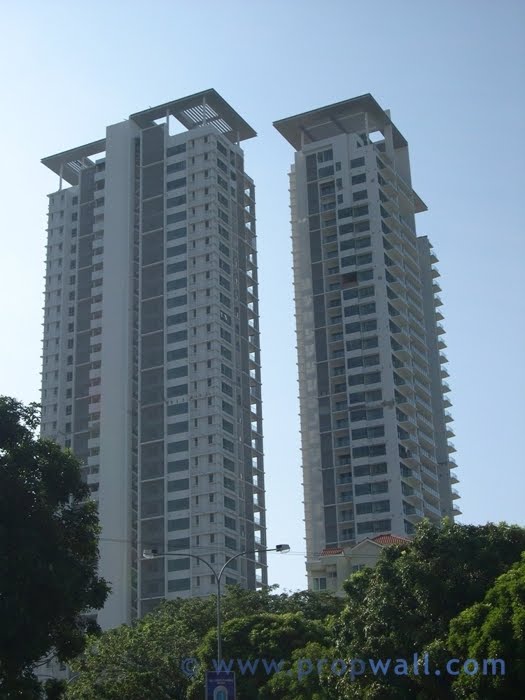
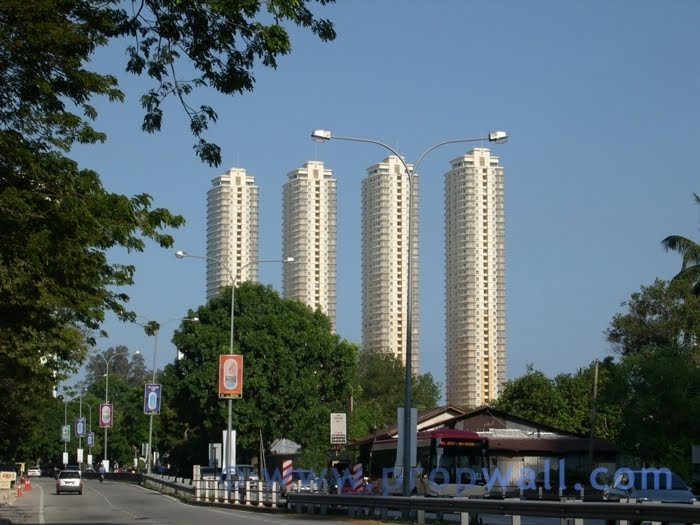
Gambar dibawah adalah contoh projek mewah yang sedang dibangunkan.


Tuesday, September 7, 2010

Touch ‘n Go Cards

Touch ‘n Go says that there is a 10 year expiry period because the components in the card fails and that the consumer need to replace it and they are charging RM10 for a new one. The new card will also last only for 10 years. I am suspecting that it is not that the card that is faulty but that they are intentionally deactivating it in their database and forcing the users to pay for a new one. But what really sounds suspicious are Touch 'n Go is an RFID card which goes for sale at about RM0.20 per pop for a 10,000 unit order. Malaysia has about 283,000 cards expiring for 2008, 2009 & 2010 alone. We definitely can source them for cheaper. Printing costs should also not exceed a few cents, so charging RM10 for a replacement is well overpriced.

You can check your card expiry here:

http://www.touchngo.com.my/checkCardExpiry.html


Technical Background Of RFID Cards:

http://www.smartcardsupply.com/Content/Cards/cards.htm


Below is the notice from the company.

Almost 283,000 Touch ‘n Go cardholders may experience difficulties when passing through a toll plaza if they do not renew their cards this year. Nearly 300,000 Touch ‘n Go cards will expire by this year with 17,000 of its customers already replacing their cards since January. Touch ‘n Go managing director Hasni Zarina Mohamed Khan said the cards, bought between 1997 and August 2000, had reached their 10-year lifespan. “If the card is not replaced, it may fail to function. This will cause inconvenience to the card users and others,” she said. She said to renew the card, customers would need to purchase a new card, costing RM10, which would last another 10 years. “This works out to RM1 per year, which is worth the cost, given all the convenience the customers get. “All they need to do is to surrender their old card and purchase a new one at any of our customer service centres,” Hasni said. Asked why there was a 10-year expiry period, she said it was because all electronic products were subject to wear and tear. “The Touch ‘n Go card is no exception. The electronic chip inside the card, which carries functions such as memory storage, radio transmitter and receiver, has a 10-year lifespan,” she said. “The chip will lose its efficiency and break down once it surpasses the lifespan, just like any other electronic appliances.” Card users can renew their cards at any Touch ‘n Go service hub or at the customer service centres along the highways listed on www.touchngo.com.my. “They can also check when their card expires at our website,” she said, adding that customers could also call its Careline Centre at 03-7628 5115. On their future plans, Hasni said they recently introduced Quik2Go, an Internet reload application. “Besides that, we are also expanding the Touch ‘n Go ‘Zing’ Auto Reload Card feature to debit cards as well as current and savings account holders,” she said.

Monday, September 6, 2010

Permit Import (AP)

Negara mampu memperoleh penjimatan sebanyak RM1.4 bilion setahun jika 60,000 Permit Import (AP) yang diberikan kepada kroni Umno/BN dijual secara terbuka, berbanding pelaksanaan Cukai Barangan dan Perkhidmatan (GST) ke atas rakyat dan meyukarkan kehidupan seharian makin rumit. Kerajaan mampu memperoleh pertambahan pendapatan sebanyak RM2.4 bilion hasil daripada penjualan AP secara terbuka, berbanding hanya RM1 bilion setahun yang diperoleh jika GST dilaksanakan. Jikalau satu AP bernilai RM40,000 dijual secara terbuka, maka kerajaan tidak perlu mengenakan GST kerana setiap tahun kerajaan boleh mendapat sekurang-kurangnya RM2.4 bilion setahun. Sistem percukaian yang berasaskan kadar perbelanjaan dilihat lebih bersifat regresif kerana bebanan cukai yang diletakkan pada golongan berpendapatan rendah lebih tinggi berbanding golongan berpendapatan tinggi. Perkara ini terbukti apabila hanya 15 peratus atau 1.8 juta sahaja daripada 12 juta pekerja di Malaysia yang layak dikenakan cukai pendapatan.Sementara itu, Timbalan Presiden Kongres Kesatuan Buruh Malaysia, A Balasubramaniam berkata, pelaksanaan empat peratus cukai itu hanya akan terus me-nindas golongan pekerja.“Daripada 27 juta rakyat di negara ini, separuh daripadanya adalah golongan pekerja, lebih kurang 13 juta ini, lebih 80 peratus adalah golongan berpendapatan rendah dan dari golongan rendah ini, hanya 11 peratus mempunyai kesatuan sekerja. “Maka golongan sekecil inilah sahaja yang berkesempatan berunding dengan majikan untuk kenaikan gaji, manakala lebih 90 peratus pekerja pula tidak berpeluang menuntut gaji yang lebih munasabah apabila GST dikenakan,” katanya.1 Malaysia jelas suatu konsep yang telah pun gagal. Mantan perdana menteri Tun Mahatir sendiri tidak faham dengan slogan tersebut bahkan rakyat berbilang kaum.

Sunday, September 5, 2010

Suara CAT


Dear Penangites Friends I do know we all are busy with education and relationship issue but I hope that you all can spend a few minutes to read this note. Are you all as Penangites are aware of Competency Accountability and Transparency or CAT of the Penang State Government. It is a guiding principle of the current Penang state administration. The link given below is The Suara Cat or Berita Rakyat Pulau Pinang. It highlight's the achievement of the state government in past 2 years. This raw material in this newsletter wont be covered or highlighted in federal government controlled main stream media tv1, tv2, tv3, ntv7,Utusan Melayu,The Star,Kosmo and etc. So please go through the material to judge the performance of the current government. We are the no more high school kids who can ignore this kind of issue's. We are adult now and it’s our social responsible towards the community by taking passive involvement in the politics. For those are yet to register as a voter please do so. A single vote carries a heavy weight age which many of us don’t release. The general election is coming soon. It’s projected to be held mid next year. So please get yourself registered at any Post Office. Its totally FREE, FAST and EASY process. Do it now because it will take at least six month to get your name in the electrocal list. Remember that WE are the leader of tomorrow. We decide the future of this country and also the government policy. This is for you and your future family.Lets shape the future of new Malaysia with no racial issue yet with article 153 of Federal Constitution of Malaysia preserved firmly. Thanks in advance for our time spent and any action taken by you all.


Suara CAT Siri 1

http://psuk.penang.gov.my/images/suaracatsiri1.pdf

SUARA CAT Siri 2

http://chanlilian.net/images/suaracat2.pdf


Thursday, August 26, 2010

Battle of Penang


The Battle of Penang occurred on 28 October 1914, during World War I. It was a naval action in the Strait of Malacca, in which the German cruiser SMS Emden sank two Allied warships.At the time, Penang was part of the Straits Settlement, a British Crown Colony. The main town of Penang, George Town, is on a harbour. In the early months of the war, it was heavily used by Allied naval and merchant vessels. Shortly after the outbreak of the war, the German East Asia Squadron left its base in Tsingtao, China. The squadron headed east for Germany, but one ship, the SMS Emden, under Lt. Commander Karl von Müller, was sent on a solitary raiding mission. Early on the morning of 28 October 1914 at about 4.30am, the Emden appeared off the George Town roads and attacked the harbour and vessels lying therein. Captain von Müller had disguised his ship by rigging a false smoke stack, which made the Emden resemble the British cruiser HMS Yarmouth. Once he had entered the harbour, however, he ran up the German naval ensign and revealed what ship the newcomer actually was. Before any of the Allied naval vessels could respond, a torpedo was fired at the Russian protected cruiser Zhemchug, followed up with a salvo of shells which riddled the ship. A second torpedo, fired as the Emden turned to leave penetrated the forward magazine, causing an explosion that sank the Russian ship. Returning to the harbour from a patrol was the French destroyer Mousquet, under the command of a Lt. Théroinne, which then set off in pursuit of Emden, but was quickly sunk by the German ship.

Saturday, August 21, 2010

New Penang Hill Train


The new Swiss made coaches for the Penang Hill train service have arrived.
The two coaches, each weighing 16 tonnes and measuring 16m in length, were unloaded at the foot of the hill after arriving yesterday. Penang Public Works, Utilities and Transportation Committee chairman Lim Hock Seng said the coaches, with 5 compartments each, would be put on the tracks for a trial run once the RM63mil upgrading of the funicular system was completed in November.The modern coaches will still have the wooden benches, which shows that it still keeping the heritage value intact,” he said when met at the foot of Penang Hill yesterday.He also added that the upgrading was originally scheduled for completion in September but had been delayed as the contractors needed more time to strengthen the tracks’ foundation and slopes.On Feb 22, the 87-year-old funicular train service ceased operations to make way for the RM63mil upgrading project by the Tourism Ministry.The new airconditioned coaches, which can carry 50 people each, will travel non-stop between the foot of the hill and the top station under the upgraded system unlike the old system where passengers have to change trains at the middle station.The commuting time of the new service would be less than 10 minutes per way compared to 30 minutes previously. The new service would be able to carry 1,000 passengers per hour compared to 250 under the old system. Futher more the coaches also would be able to glide down at a slower speed to the lower station should there be any technical glitch or power supply disruption. There would also be a sensor system to enable early detection of landslides or trees falling onto the rail tracks as well as a stand-by generator to provide power should there be electricity supply disruption.


Thursday, August 19, 2010

The Prehistoric Malaysia


Avalokiteshvara statue found in Perak, 8th-9th century bronze


The Buddha-Gupta stone dates to the 4th-5th Century CE. It was found in Seberang Perai, Malaysia and is kept in the National Museum, Calcutta, India. A replica of the stone is kept at the National Museum of Malaysia. It was dedicated by an Indian Merchant, Buddha Gupta, as an expression of gratitude for his safe arrival after a voyage from India to the Malay peninsula and is proof of the early contact through trade between India and Malaysia.

Most of us have been using the high school text book provided by the goverment as the only source of information regarding the history of our country, Malaya aka Malaysia.The hidden history of Malaysia have been manipulated alot.In this entry I would like to share some information about the real story of Malaya.The Prehistoric Malaysia may be traced back as far as 200,000 years ago from the stone tools found at Bukit Jawa, an archaeological site in Lenggong, Perak. The earliest human skeleton in Peninsular Malaysia, Perak Man, dates back 11,000 years and Perak Woman dating back 8,000 years, were also discovered in Lenggong. The site has an undisturbed stone tool production area, created using equipment such as anvils and hammer stones. The Tambun Cave paintings are also situated in Perak. From East Malaysia, Sarawak's Niah Caves, there is evidence of the oldest human remains in Malaysia, dating back 40,000 years.Hindu and Buddhist cultures imported from India dominated early Malaysian history. They reached their peak in the Sumatran based Srivijaya civilization, whose influence extended through Sumatra, Java, the Malay Peninsula and much of Borneo from the 7th to the 14th centuries.Although Muslims had only passed through Malaya as early as the tenth century, it was not until the 14th and 15th centuries that Islam first established itself on soil of Malaya. The adoption of Islam by the 15th century saw the rise of sultanates, the most prominent of which was the Malacca Sultanates.Indian influence in the region dates back to at least the 3rd century BCE. Indian traders came to the archipelago for abundant forest and marine products, and to trade with merchants from China. Both Hinduism and Buddhism were well established in the Malay Peninsula by the beginning of the 1st century. Kedah was known as Kedaram or Kataha, in ancient Pallava or Sanskrit .It was in the direct route of invasions of Indian traders and kings. Rajendra Chola, Tamil Emperor who is now thought to have laid Kota Gelanggi to waste, put Kedah to heel in 1025 but his successor, Vir Rajendra Chola, had to put down a Kedah rebellion to overthrow the invaders. The port of Malacca on the west coast of the Malay Peninsula was founded around 1400 by Parameswara, a rebel prince of the Srivijaya royal line, who was also claimed in the Sejarah Melayu to be a descendant of Alexander the Great. Expelled from Sumatra for killing the ruler of Temasek aka Singapore, Parameswara established himself in Malacca. The kingdom rapidly assumed the place previously held by Srivijaya, establishing independent relations with China, and exploiting its position to dominate the Straits to control the China-India maritime trade.Within a few years of its establishment, Malacca officially adopted Islam, and then the Raja became a Sultan. The political power of the Malaccan Sultanate helped Islam’s rapid spread through the archipelago, reaching as far as modern day Philippines, while leaving Bali as an isolated outpost of Hinduism.Sultans of Malacca became the models for all subsequent Malay rulers.It became a cultural centre, creating the modern Malay culture.The culture with a blend of indigenous Malay and imported Indian, Chinese and Islamic elements. Melaka's fashions in literature, art, music, dance and dress, and the ornate titles of its royal court, came to be seen as the standard for all ethnic Malays. The court of Malacca also gave great prestige to the Malay language, which had originally evolved in Sumatra and been brought to Melaka at the time of its foundation. In time Malay came to be the official language of all the Malaysian states, although local languages survived in many places.Because Islam was introduced by traders and not military conquest, there was no imposition of the Arabic language or Arab political customs. Since most ethnic Malays could not read the Arabic Qur'an, the local version of Islam was much less rigorous than in the Arabic world. And since the indigenous Malay rulers retained their power, the Islamic clergy did not gain the political influence it enjoyed in other parts of the Islamic world.


The closing of the overland route from Asia to Europe by the Ottoman Empire and the claim towards trade monopoly with India and southeast Asia by Arab traders, led European powers to look for a maritime route. In 1498 Vasco da Gama, sent by King John II of Portugal, found the route around the Cape of Good Hope to India, and in 1511 Afonso de Albuquerque led an expedition to Malaya which seized Melaka following a month long siege and made it the centre of Portugal’s eastern activity. The son of the last Sultan of Malacca fled to the island of Bintan where he founded a state that which became the Sultanate of Johor. By the late sixteenth century the tin mines of northern Malaya had been discovered by European traders, and Perak grew wealthy on the proceeds of tin exports. The European colonial expanded further into the region. The Portuguese gained control over the trade from the spice rich Maluku islands, and in 1571 the Spanish captured Manila.In 1607, the Sultanate of Aceh rose as the powerful and wealthiest state in Malay archipelago. Under Iskandar Muda , he extended the sultanate's control over most of Sumatra and Malay peninsula. He conquered Pahang, a tin-producing region on the Malayan Peninsula. The strength of his formidable fleet was brought to an end with a disastrous campaign against Malacca in 1629, when the combined Portuguese and Johor forces managed to destroy all his ships and 19,000 troops according to Portuguese account. Aceh forces was not destroyed, however, as Aceh was able to conquer Kedah within the same year and taking many of its citizens to Aceh. The Sultan's son in law, Iskandar Thani, former prince of Pahang later became his successor. During his reign Aceh focused on religious unity.In the early seventeenth century, the Dutch established Dutch East India Company or VOC based in west Java. From there they expanded across the archipelago, forming an alliance with Johore against their main enemies, the Portuguese at Melaka and the powerful Sultan of Aceh. In 1641, after several attempts, the VOC Johore alliance captured Melaka, breaking Portuguese power in Malaya. Portugal was left with only Portuguese Timor. Backed by the Dutch, Johore established a loose hegemony over the Malay states, except Perak, which was able to play off Johore against the Siamese to the north and retain its independence.The weakness of the Malay states in this period allowed other people to migrate into the Malay homelands. The most significant migrants being the Bugis, seafarers from eastern Indonesia, who regularly raided the Malay coasts. They seized control of Johore following the assassination of the last Sultan of the old Malacca in 1699 and Bugis took control of Selangor. The Minangkabau from center Sumatra migrated into Malaya, and eventually established their own state in Negeri Sembilan. The fall of Johore left a power vacuum on the Malay Peninsula which was partly filled by the Siamese kings of Ayutthaya kingdom, who made the five northern Malay states, Kedah, Kelantan, Patani, Perlis and Terengganu their vassals. Johore’s eclipse also left Perak as the unrivalled leader of the Malay states.Then the economic importance of Malaya to Europe grew rapidly during the 18th century. The fast-growing tea trade between China and Britain increased the demand for high quality Malayan tin, which was used to line tea chests. Malayan pepper also had a high reputation in Europe, while Kelantan and Pahang had gold mines. This established a pattern which characterised Malayan society for the next 200 years.Rural Malay population increasingly under the domination of wealthy urban immigrant communities, whose power the Sultans were unable to resist.English traders had been present in Malay waters since the 17th century, but it was not until the mid 18th century that the British East India Company, based in British India, developed a serious interest in Malayan affairs. The growth of the China trade in British ships increased the Company’s desire for bases in the region. Various islands were used for this purpose, but the first permanent acquisition was Penang, leased from the Sultan of Kedah in 1786. This was followed soon after by the leasing of a block of territory on the mainland opposite Penang known as Province Wellesley.In 1795, during the Napoleonic Wars, the British occupied Dutch Malacca to forestall possible French interest in the area. When Malacca was handed back to the Dutch in 1815, the British governor, Stamford Raffles, looked for an alternative base, and in 1819 he acquired Singapore from the Sultan of Johore. The twin bases of Penang and Singapore, together with the decline of the Netherlands as a naval power, made Britain the dominant force in Malayan affairs. British influence was increased by Malayan fears of Siamese expansionism, to which Britain made a useful counterweight.During the 19th century the Malay Sultans became loyal allies of the British Empire.


In 1824 British hegemony in Malaya was formalised by the Anglo-Dutch Treaty, the decisive event in the formation of modern Malaysia. The Dutch evacuated Melaka and renounced all interest in Malaya, while the British recognised Dutch rule over the rest of the East Indies. Penang, Melaka and Singapore were united as the Straits Settlements, ruled by a British Governor in Singapore. During the 19th century, the British concluded treaties with the Malay states, installing “residents” who advised the Sultans and soon became the effective rulers of their states. The wealth of Perak’s tin mines made political stability there a priority for British investors, and Perak was thus the first Malay state to agree to the supervision of a British resident. Johore alone resisted, holding out until 1914. In 1909 the weakened Siamese kingdom was compelled to cede Kedah, Kelantan, Perlis and Terengganu to the British. Siam retained the Sultanate of Patani, leaving a Muslim minority in southern Thailand which has been a source of much trouble for successive Thai governments. During the late 19th century the British also gained control of the north coast of Borneo, where Dutch rule had never been established. The eastern part of this region now Sabah was under the nominal control of the Sultan of Sulu, a vassal of the Spanish Philippines. The rest was the territory of the Sultanate of Brunei. In 1841, a British adventurer, James Brooke, leased Kuching from the Sultan and made himself the “White Raja” of Sarawak, steadily expanding his territory at Brunei’s expense. North-eastern Borneo was colonised by British traders, and in 1881 the British North Borneo Company was granted control of the territory under the distant supervision of the governor in Singapore. The Spanish Philippines never recognised this loss of the Sultan of Sulu’s territory, laying the basis of the subsequent Filipino claim to Sabah. In 1888 what was left of Brunei was made a British protectorate, and in 1891 another Anglo-Dutch treaty formalised the border between British and Dutch Borneo. Thus the borders of modern Malaysia were formed, in complete disregard of ethnic and linguistic factors, by the colonial powers. By 1910 the pattern of British rule in the Malay lands was established. The Straits Settlements were a Crown Colony, ruled by a governor under the supervision of the Colonial Office in London. Their population was about half Chinese, but all residents, regardless of race, were British subjects. The first four states to accept British residents, Perak, Selangor, Negeri Sembilan and Pahang, were termed the Federated Malay States: while technically independent, they were placed under a Resident-General in 1895, making them British colonies in all but name. The Unfederated Malay States (Johore, Kedah, Kelantan, Perlis and Terengganu) had a slightly larger degree of independence, although they were unable to resist the wishes of their British Residents for long. Johore, as Britain’s closest ally in Malay affairs, had the privilege of a written constitution, which gave the Sultan the right to appoint his own Cabinet, but he was generally careful to consult the British first.


The outbreak of war in the Pacific in December 1941 found the British in Malaya completely unprepared. During the 1930s, anticipating the rising threat of Japanese naval power, they had built a great naval base at Singapore, but never anticipated an invasion of Malaya from the north. Because of the demands of the war in Europe, there was virtually no British air capacity in the Far East. The Japanese were thus able to attack from their bases in IndoChina and despite stubborn resistance from British, Australian and Indian forces, they overran Malaya in two months. Singapore, with no landward defences, no air cover and no water supply, was forced to surrender in February 1942, doing irreparable damage to British prestige. British North Borneo and Brunei were also occupied.The Japanese had a racial policy just as the British did. They regarded the Malays as a colonial people liberated from British imperialist rule, and fostered a limited form of Malay nationalism, which gained them some degree of collaboration from the Malay civil service and intellectuals.Most of the Sultans also collaborated with the Japanese, although they maintained later that they had done so unwillingly.The occupiers regarded the Chinese, however, as enemy aliens, and treated them with great harshness: during the so called sook ching (purification through suffering), up to 80,000 Chinese in Malaya and Singapore were killed. Chinese businesses were expropriated and Chinese schools either closed or burned down. Not surprisingly the Chinese, led by the Malayan Communist Party (MCP), became the backbone of the Malayan Peoples' Anti-Japanese Army (MPAJA), which with British assistance became the most effective resistance force in the occupied Asian countries. But the Japanese also offended Malay nationalism by allowing their ally Thailand to re-annex the four northern states, Kedah, Perlis, Kelantan and Terengganu that had been surrendered to British in 1909. The loss of Malaya’s export markets soon produced mass unemployment which affected all races and made the Japanese increasingly unpopular. The Malayans were thus on the whole glad to see the British back in 1945, but things could not remain as they were before the war. Britain was bankrupt and the new Labour government was keen to withdraw its forces from the East as soon as possible. Colonial self-rule and eventual independence were now British policy. The tide of colonial nationalism sweeping through Asia soon reached Malaya. But most Malays were more concerned with defending themselves against the Malayan Communist Party (MCP) which was mostly made up of Chinese, than with demanding independence from the British . Indeed their immediate concern was that the British not leave and abandon the Malays to the armed Communists of the MPAJA, which was the largest armed force in the country. During the last year of the war there had been armed clashes between Chinese and Malays and many Malays were killed by the armed Chinese communists members of the MPAJA and the returning British found a country on the brink of civil war. In 1946 the British announced plans for a Malayan Union, which would turn the Federated and Unfederated Malay States, plus Penang and Malacca but not Singapore, into a unitary state, with a view to independence within a few years. There would be a common Malayan citizenship regardless of race. The Malays were horrified at this recognition that the Chinese and Indians were now to be a permanent and equal part of Malaya’s future, and vowed their opposition to the plan. The Sultans, who had initially supported it, backed down and placed themselves at the head of the resistance. In 1946 the United Malays National Organisation (UMNO) was founded by Malay nationalists led by Dato Onn bin Jaafar, the Chief Minister of Johore. UMNO favoured independence for Malaya, but only if the new state was run exclusively by the Malays. Faced with implacable Malay opposition, the British dropped the plan. Meanwhile the Communists were moving towards open insurrection. The MPAJA had been disbanded in December 1945, and the MCP organised as a legal political party, but the MPAJA’s arms were carefully stored for future use. The MCP policy was for immediate independence with full equality for all races. This meant it recruited very few Malays. The Party’s strength was in the Chinese-dominated trade unions, particularly in Singapore, and in the Chinese schools, where the teachers, mostly born in China, saw the Communist Party of China as the leader of China’s national revival. In March 1947, reflecting the international Communist movement’s “turn to left” as the Cold War set in, the MCP leader Lai Tek was purged and replaced by the veteran MPAJA guerrilla leader Chin Peng, who turned the party increasingly to direct action. In July, following a string of assassinations of plantation managers, the colonial government struck back, declaring a State of Emergency, banning the MCP and arresting hundreds of its militants. The Party retreated to the jungle and formed the Malayan Peoples’ Liberation Army, with about 13,000 men under arms, all Chinese. The Malayan Emergency involved six years of bitter fighting across the Malayan Peninsula. The British strategy, which proved ultimately successful, was to isolate the MCP from its support base by a combination of economic and political concessions to the Chinese and the resettlement of Chinese squatters into “New Villages” in “white areas” free of MCP influence. The effective mobilisation of the Malays against the MCP was also an important part the British strategy. From 1949 the MCP campaign lost momentum and the number of recruits fell sharply. Although the MCP succeeded in assassinating the British High Commissioner, Sir Henry Gurney, in October 1951, this turn to “terrorist” tactics alienated many moderate Chinese from the Party. The arrival of Lt Gen Sir Gerald Templer as British commander in 1952 was the beginning of the end of the Emergency. Templer invented the techniques of counter-insurgency warfare in Malaya and applied them ruthlessly.


Chinese reaction against the MCP was shown by the formation of the Malayan Chinese Association (MCA) in 1949 as a vehicle for moderate Chinese political opinion. Its leader, Tan Cheng Lock, favoured a policy of collaboration with UMNO to win Malayan independence on a policy of equal citizenship, but with sufficient concessions to Malay sensitivities to ease nationalist fears. Tan formed a close collaboration with Tunku Abdul Rahman, the Chief Minister of Kedah and from 1951 successor to Datuk Onn as leader of UMNO. Since the British had announced in 1949 that Malaya would soon become independent whether the Malayans liked it or not, both leaders were determined to forge an agreement their communities could live with as a basis for a stable independent state. The UMNO-MCA Alliance which was later joined by the Malayan Indian Congress (MIC) won convincing victories in local and state elections in both Malay and Chinese areas between 1952 and 1955. The introduction of elected local government was another important step in defeating the Communists. After Joseph Stalin’s death in 1953, there was a split in the MCP leadership over the wisdom of continuing the armed struggle. Many MCP militants lost heart and went home, and by the time Templer left Malaya in 1954 the Emergency was over. The Emergency left a lasting legacy of bitterness between Malays and Chinese. During 1955 and 1956 UMNO, the MCA and the British hammered out a constitutional settlement for anciple of equal citizenship for all races. In exchange, the MCA agreed that Malaya’s head of state would be drawn from the ranks of the Malay Sultans, that Malay would be the official language, and that Malay education and economic development would be promoted and subsidised. In effect this meant that Malaya would be run by the Malays, particularly since they continued to dominate the civil service, the army and the police, but that the Chinese and Indians would have proportionate representation in the Cabinet and the parliament, would run those states where they were the majority, and would have their economic position protected. The difficult issue of who would control the education system was deferred until after independence. This came on August 31, 1957, when Tunku Abdul Rahman became the first Prime Minister of independent Malaya. This left the unfinished business of the other British-ruled territories in the region. After the Japanese surrender the Brooke family and the British North Borneo Company gave up their control of Sarawak and Sabah respectively, and these became British Crown Colonies. They were much less economically developed than Malaya, and their local political leaderships were too weak to demand independence. Singapore, with its large Chinese majority, achieved autonomy in 1955, and in 1959 the young socialist leader Lee Kuan Yew became Prime Minister. The Sultan of Brunei remained as a British client in his oilrich enclave. Between 1959 and 1962 the British government orchestrated complex negotiations between these local leaders and the Malayan government. In 1961, Abdul Rahman mooted the idea of forming "Malaysia", which would consist of Brunei, Malaya, Sabah, Sarawak and Singapore, all of which had been British colonies. The reasoning behind this was that this would allow the central government to control and combat communist activities, especially in Singapore. It was also feared that if Singapore achieved independence, it would become a base for Chinese chauvinists to threaten Malayan sovereignty. To balance out the ethnic composition of the new nation, the other states, whose Malay and indigenous populations would cancel out the Singaporean Chinese majority, were also included.Although Lee Kuan Yew supported the proposal, his opponents from the Singaporean Socialist Front resisted, arguing that this was a ploy for the British to continue controlling the region. Most political parties in Sarawak were also against the merger, and in Sabah, where there were no political parties, community representatives also stated their opposition. Although the Sultan of Brunei supported the merger, the Parti Rakyat Brunei opposed it as well. At the Commonwealth Prime Ministers Conference in 1961, Abdul Rahman explained his proposal further to its opponents. In October, he obtained agreement from the British government to the plan, provided that feedback be obtained from the communities involved in the merger. The Cobbold Commission, named after its head, Lord Cobbold, conducted a study in the Borneo territories and approved a merger with Sabah and Sarawak; however, it was found that a substantial number of Bruneians opposed merger. A referendum was conducted in Singapore to gauge opinion, and 70% supported merger with substantial autonomy given to the state government.After reviewing the Cobbold Commission's findings, the British government appointed the Landsdowne Commission to draft a constitution for Malaysia. The eventual constitution was essentially the same as the 1957 constitution, albeit with some rewording. For instance, giving recognition to the special position of the natives of the Borneo States. Sabah, Sarawak and Singapore were also granted some autonomy unavailable to the states of Malaya. After negotiations in July 1963, it was agreed that Malaysia would come into being on 31 August 1963, consisting of Malaya, Sabah, Sarawak and Singapore. Brunei pulled out after Parti Rakyat Brunei staged an armed revolt, which, though it was put down, was viewed as potentially destabilising to the new nation.Malaysia formally came into being on 16 September 1963, consisting of Malaya, Sabah, Sarawak and Singapore. In 1963 the total population of Malaysia was about 10 million.

Wednesday, August 18, 2010

Penang Dahulu


UMNO Tiup " API" Perkauman


UMNO mula mengatur langkah untuk cetuskan hura-hara dalam negara melalui agennya Utusan Malaysia.Dalam rencananya yang bertajuk "Benar, 'perang besar' boleh berlaku di Malaysia”, penolong ketua pengarang I, Kumpulan Utusan Malaysia, Datuk Zaini Hassan menulis 'perang' kali ini lebih besar daripada tragedi 13 Mei 1969, kerana itu hanyalah konflik melibatkan kegelisahan kaum atau social unrest yang kecil sahaja.Zaini berkata pelbagai pihak sedang membakar semangat antara satu kaum dengan kaum yang lain, termasuk cubaan untuk menukar perlembagaan Malaysia sekarang kepada satu perlembagaan yang baru. Ini adalah merupakan percubaan terkini UMNO yang kini sudah tenat untuk meraih sokongan rakyat terutamanya orang Melayu.UMNO yang sekarang kehilangan pengaruh untuk memerintah negara saban hari dilihat memainkan sentimen perkauman di media arus perdana bagi mengalih perhatian rakyat daripada skandal mega kes kezaliman ,rasuah dan salah guna kuasa BN. Rakyat yang kini sungguh bersatu untuk merobek benteng BN dalam pilihanraya akan datang makin jemu dengan sikap pemerintah yang kian berlakuan sebagai pembangkang dan asyik menyerang Pakatan Rakyat sehebat yang mereka mampu.Datuk Seri Anwar berkata "Kita berhadapan dengan satu parti yang sudah tenat dan tahu kehilangan dukungan dan pengaruh orang Melayu dan rakyat". "Kalau benar ada orang yang mahu buat perlembagaan baru, kita minta perkara itu disiasat kerana ia bertentangan dengan pendirian rakyat negara ini", ujar beliau lagi."Kalau Pakatan Rakyat, kita ketiga-tiga parti sudah pun tandatangan. Saya, Datuk Seri Hadi Awang dan Lim Kit Siang mengesahkan peruntukan yang ada dalam perlembagaan dengan pendekatan baru untuk rakyat Malaysia lebih yakin,” kata Anwar lagi.Sementara itu, ketua penerangan PAS, Idris Ahmad berkata mufti Perak, Tan Sri Harussani Zakaria perlu mendedahkan kandungan 'perlembagaan baru' yang didakwanya itu dan melaporkannya kepada polis untuk disiasat.Beliau yang dipetik HarakahDaily berkata PAS terkejut dengan kenyataan Harussani bahawa ada pihak tertentu cuba menggantikan perlembagaan persekutuan bagi menyisihkan hak-hak orang Melayu dan juga Islam yang dijamin dalam perlembagaan sekarang.“PAS mengharapkan kepada Tan Sri Harussani Zakaria janganlah memanaskan suasana politik yang sedia panas dengan kenyataan seperti ini di tempat awam, kerana bimbang akan menimbulkan suasana yang tidak harmonis,” katanya.Menurut Idris, PAS dan Pakatan Rakyat tidak pernah membincangkan perkara tersebut dalam setiap kali pertemuan Majlis Tertinggi Pakatan Rakyat yang diadakan dua kali sebulan.Malahan, jelasnya konvensyen Pakatan Rakyat pertama pada 19 Disember 2009 di Shah Alam telah bersepakat untuk mempertahankan perlembagaan persekutuan, Islam sebagai agama rasmi, kedudukan istimewa orang Melayu dan bumiputera sejajar dengan perkara 153.Selain itu, Pakatan juga berikrar mempertahankan peranan dan tanggungjawab institusi Raja Berperlembagaan serta memartabatkan penggunaan bahasa Melayu sebagai lingua franca serantau.“Tidak ada agenda yang tersembunyi yang dibawa oleh Pakatan Rakyat, jauh sekali menyediakan perlembagaan baru bagi merungkai perkara yang sudah menjadi kontrak sosial dan telah diterima pakai sejak sekian lama,” katanya.

Tuesday, August 17, 2010

Ketua Menteri Pulau Pinang Di Masjid Kampung Bahru, Jalan Air Itam


Ketua Menteri Pulau Pinang Yb Lim Guan petang tadi meluangkan masa di majlis berbuka puasa di Halaman Masjid Kampung Bahru, Jalan Air Itam, Air Itam.Kehadiran beliau yang dalam situasi yang serba " Low Profile" sudah cukup untuk mengambarkan perbezaan diantara pemimpin korup BN/ UMNO yang sentiasa mahukan publisiti murahan demi "political miliage" mereka.Walaupun dilabel sebagai anti-melayu namun ketua menteri masih sudi meluangkan masa bersama rakyat beragama islam di bulan Ramadhan dan sekaligus menepis tomahan keji dan buruk daripada BN/UMNO.Sekian Salam Reformasi.